FERC rejects reform, leaves customers paying for utility trade associations

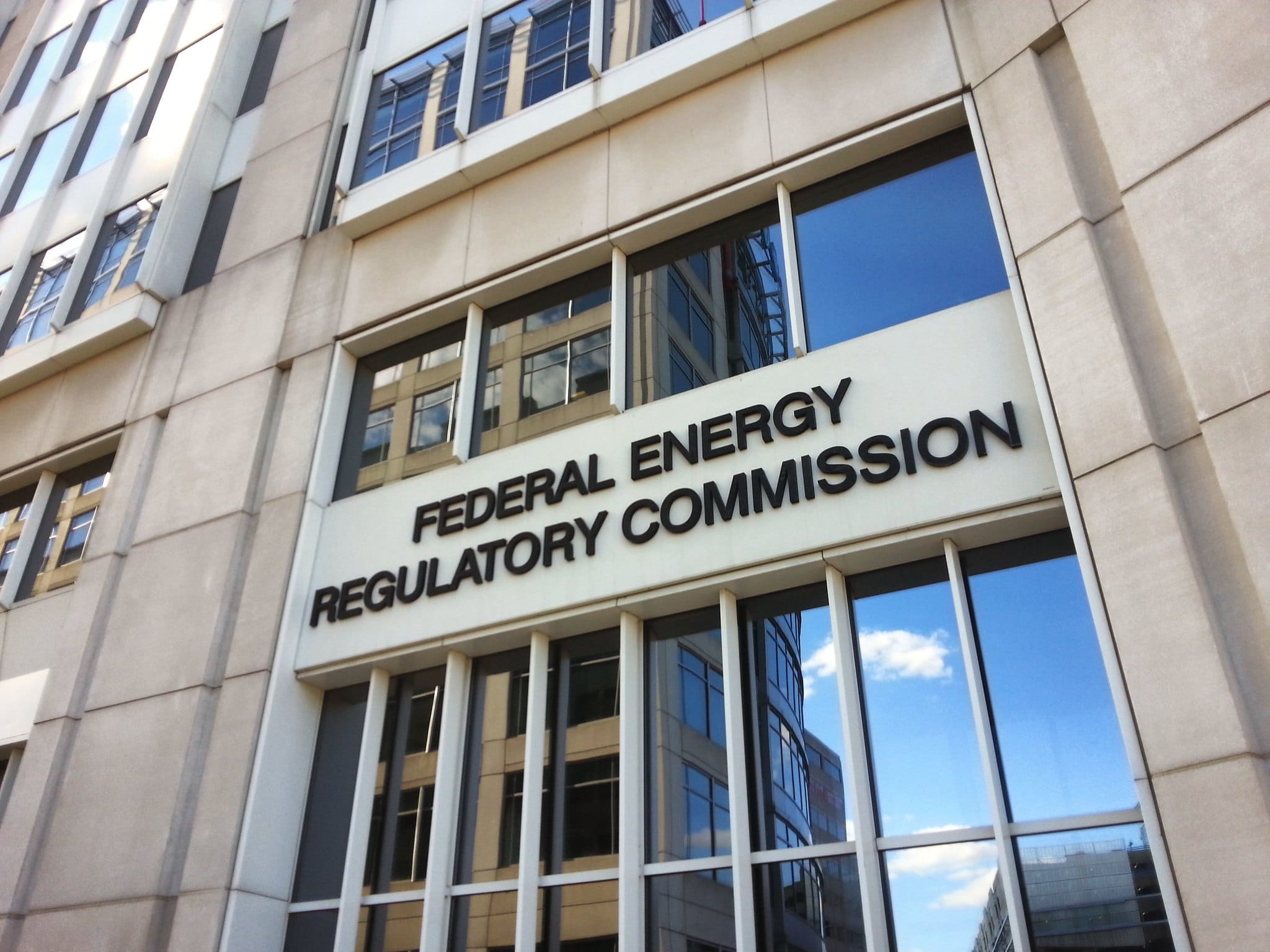
Federal energy regulators voted yesterday to keep in place accounting rules that allow monopoly utilities to charge customers for trade association activities, including political advocacy. The decision rejects calls to reform accounting rules and protect customers from footing the bill for these expenses.
The move comes as state regulators and lawmakers across the country have increasingly acted to block these costs from state-overseen retail rates – saving customers millions of dollars. Federal regulators could have done the same for federal wholesale transmission rates. Instead, they chose to maintain the status quo, allowing utilities to continue passing these expenses to customers.
The Federal Energy Regulatory Commission (FERC) first took up the issue in December 2021, issuing a Notice of Inquiry (NOI) to seek comment on the accounting treatment of trade association dues in response to a petition filed by the Center for Biological Diversity (CBD). CBD’s petition urged FERC to amend the Uniform Systems of Accounts (USofA), FERC’s accounting guidelines to utilities, to require utilities record the millions of dollars that many of them pay in industry association dues in a presumptively non-recoverable (i.e., below-the-line) account for rate recovery purposes.
A broad coalition of consumer advocates, state regulators, environmental advocates, and large energy users supported that approach, warning that current accounting rules allow utilities to pass through costs that customers cannot meaningfully review or challenge.
Diverse coalition urged FERC to take action
In response to both CBD’s petition and FERC’s NOI, dozens of organizations, including consumer advocates who intervene during state and federal utility rate cases, filed comments in support of amending the USofA to require that all industry association dues be recorded in a presumptively non-recoverable account, Account 426.4, which would shift the burden of proof on utilities to demonstrate why customers paying for trade association dues is just and reasonable.
Comments in response to the NOI noted how the utility trade associations engage in political activities to shape political outcomes well beyond direct communication about specific legislation – particularly the American Gas Association (AGA) and the Edison Electric Institute (EEI). Collectively, the trade groups reported more than $140 million in revenue in 2024.
Commissioner Rosner gave two main pieces of advice regarding this issue during yesterday’s open meeting. He instructed utilities to ask the trade associations for specific breakdowns of how the trade groups spend customer money, and advised customers to use the FERC process to “come in and request transparency” and ask for additional information about the expenses in an account under the formula rate.
Comments in the NOI docket show that those recommendations have not been successful.
The Office of the Ohio Consumers’ Counsel wrote, “Ohio electric utilities often provide only a copy of the invoice from EEI to the local utility … the invoice provides no itemization of their payments to EEI that would allow an evaluation of whether there are other charges that are inappropriate for recovery from consumers.”
The Louisiana Public Service Commission noted that utilities, even when given the basic invoice, still fail to designate that small, self-designated portion of lobbying to Account 426.4:
“In light of these errors, utilities cannot be relied on to properly segregate industry dues between above-the-line and below-the-line expenses and do not deserve the benefit of the doubt with respect to those costs … the invoices of industry associations like EEI do not provide any detail regarding what costs are included in the dues, or how they determine what is attributable to non-recoverable political activity.”
The Utility Reform Network (TURN) offered a transparency recommendation for FERC to adopt that Rosner punted to the utilities to do voluntarily.
TURN wrote:
“FERC should adopt standard transparency requirements for utilities seeking rate recovery of industry association dues, including disclosure of the association’s costs for the following NARUC cost categories: (1) Legislative Advocacy, (2) Legislative Policy Research, (3) Regulatory Advocacy, (4) Advertising, (5) Marketing, and (6) Public Relations. These requirements would enable the regulator to ensure that ratepayers pay only for costs that confer clear benefits on ratepayers, and do not pay for the association’s political activities or public policy advocacy.”
TURN referenced NARUC’s audits of the trade associations that occurred briefly in the 1980s and 1990s. The audits informed state regulators how to treat trade association costs by using those various cost category details. NARUC no longer conducts the audits, nor do the trade associations provide those breakdowns. Instead, as noted in many of the comments, the utilities either provide an invoice for the membership payment they received or the latest lobbying report that EEI has started publishing in recent years. But unlike the NARUC audits, the latest EEI report fails to provide meaningful details on costs but rather breaks down expenses into broad “Business and Policy Issues” like “Grid Security, Reliability, and Resilience” or “Grid Investment & Modernization.”
Commenters in the docket, such as the Virginia Office of Attorney General, urged FERC to address the issue by placing the burden on utilities to prove that no trade association money is being spent on political advocacy, noting that it is unrealistic for customers to examine the costs and wrote, “Ratepayers typically lack the resources, access to information, or both that are necessary to challenge the categorization of a cost.”
The Virginia Office of Attorney General referenced the case of Newman vs. FERC, in which customers of FirstEnergy challenged political activity costs included in formula rates billed by a joint venture formed by FirstEnergy and American Electric Power called the Potomac-Appalachian Transmission Highline, LLC (PATH). The challenge ultimately reached the U.S. Court of Appeals for the D.C. Circuit, which ruled that even indirect influence expenditures, such as costs incurred by a third party for advocacy work, belong in Account 426.4. The procedural process spanned more than a decade.
Despite recognizing the work of ratepayers, the Virginia AG’s office, among others, still urged FERC to impose the burden on the utilities.
The plaintiffs in the case – Keryn Newman, Alison Haverty and Martha Peine – also submitted comments in the docket and noted that FERC has developed a process for customers seeking transparency to engage with utilities to access information and challenge a specific expense. “This often requires multiple discovery requests and sometimes motions to compel production of information,” wrote the ratepayers, and further said:
“All efforts grind to a halt, however, when it comes to utility memberships. The utility cannot be compelled to provide information it does not have, such as the programs and finances of a third-party organization … Is a non-detailed invoice from the organization sufficient evidence to support placing the expense in a recoverable account? This is a decision that must be made by the Commission when setting a stated rate, or within the confines of a formal challenge to a formula rate annual update.”
The ratepayers then said FERC could also address the issue by requiring utilities to detail expenses with new pages as part of the annual Form No. 1 filings. (EPI submitted comments in Docket No. IC25-7-000 in 2025 to urge FERC to adopt additional transparency details as part of the Form No.1 filing for certain accounts within the USofA. FERC did not consider the modifications at the time.)
States are enacting their own laws to protect customers
Despite FERC’s decision yesterday to reject reforms – and its broader reluctance in recent years – Republican and Democratic state lawmakers are moving forward with changes for jurisdictional utilities.
California and Maryland passed legislation last session, with California’s law prohibiting utilities from using customer money for trade associations that conduct political influence activities, as well as promotional advertising. The California law also requires utilities to file annual disclosures to improve transparency, and imposing financial penalties for violations.
More recently, Alabama enacted legislation this month that prohibits utilities from recovering expenses for lobbying, non-safety related advertising, and “funding or grants that impact rates to other persons or organizations.”
Connecticut was an early state to pass comprehensive utility accountability legislation. Customers have been spared from footing the bill for nearly $14 million in their utility spending on political influence and advocacy activities, as well as Board of Directors’ perks, last year, according to the required utility transparency reports.
State utility regulators can and have taken action as well.
The Minnesota PUC approved a settlement in March 2025 in which Xcel Energy agreed to remove nearly $300,000 in annual dues to the American Gas Association. Xcel had relied upon the invoice provided by AGA to inform how to categorize costs, but as EPI testimony detailed, the 3.4% share of dues identified by AGA as allocable to lobbying is insufficient evidence that the company wasn’t billing customers for political activities, since AGA’s own materials reveal it spends a larger percentage of its budget than that number on costs categories as “Government Affairs and Public Policy” along with other areas such as “General Counsel and Federal Regulatory Affairs” and “Communications.”
The Arizona Corporation Commission removed all of EEI’s dues from the Arizona Public Service rate case in 2024. And the Kentucky PSC similarly denied recovery of EEI dues in a 2021 rate case. The utility in the Kentucky rate case asked EEI how the trade association spends its money, specifically requesting that it categorize the spending as NARUC had in performing the audits. EEI said, “EEI is not required, nor do we, track or account our budget in the manner requested. As a result, EEI is unable to provide the information as you requested.”
If FERC had acted, the immediate effect would have been on jurisdictional wholesale transmission rates. But because states rely on the Uniform System of Accounts as the foundation for utility accounting, the reforms would have downstream impacts on retail ratemaking as well – even as some states are already taking steps to remove the costs from retail rates. FERC action would have established consistent, nationwide cost-recovery standards, rather than leaving states to address the issue.
Federal legislation can solve the problem
Representative Kathy Castor (D-FL) introduced legislation in 2023 and again in 2025 – referred to as the Ethics in Energy Act of 2025. The legislation directs FERC to act upon what many comments urged the agency to do in the NOI docket – prohibit utilities from recovering political expenses from ratepayers. Representatives Doris Matsui (D-CA), Jennifer McClellan (D-VA), Alexandria Ocasio-Cortez (D-NY), Chellie Pingree (D-ME), Shri Thanedar (D-MI), and Rashida Tlaib (D-MI) cosponsored the latest legislation.