Utility lobbyists host private gathering in Red Sox suite for regulators ahead of NARUC meeting

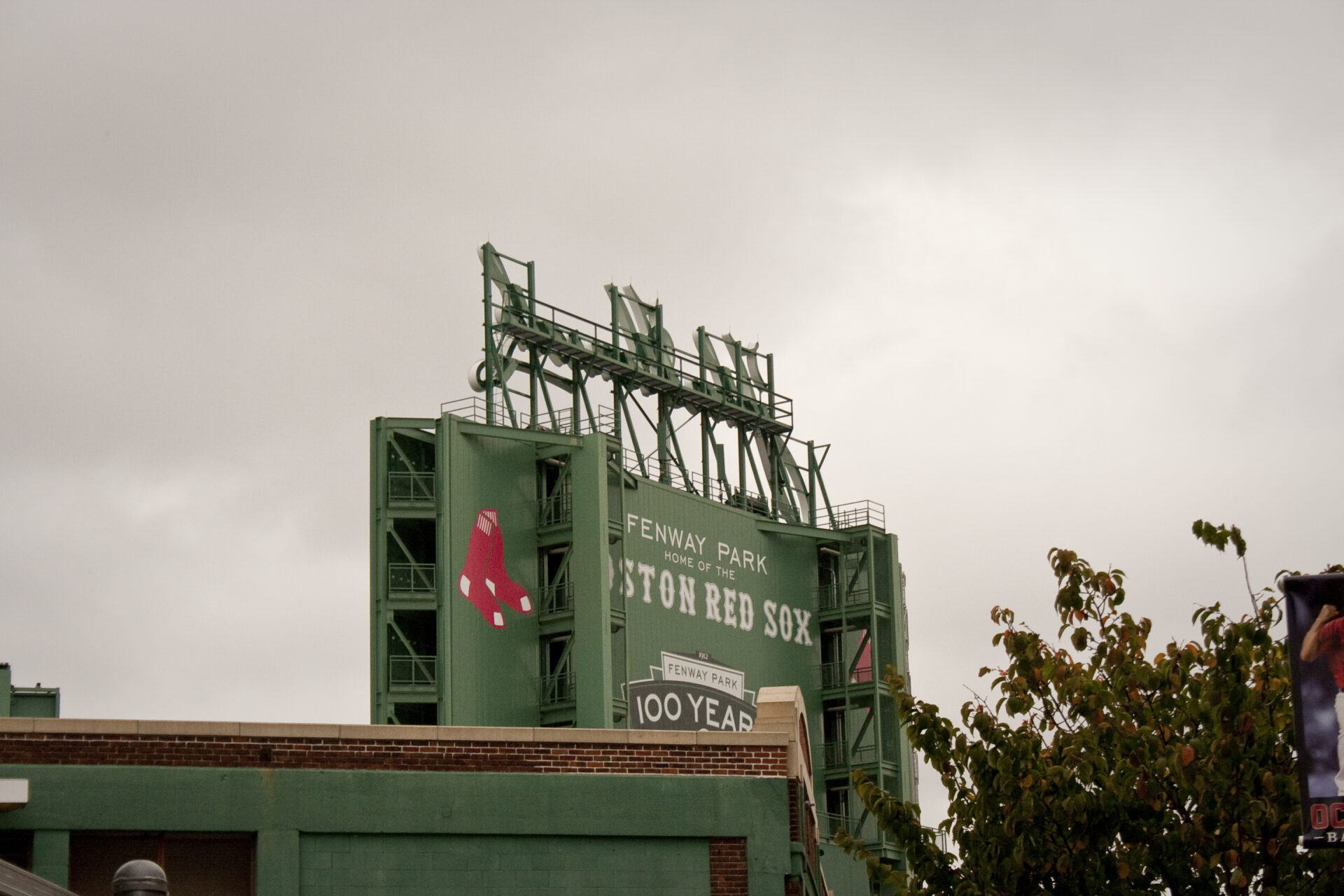
The trade association representing for-profit electric utilities hosted utility regulators alongside industry lobbyists in a luxury Fenway Park suite for a Red Sox game on the sidelines of a regulators’ conference last July, according to public records obtained by the Energy and Policy Institute.
The Edison Electric Institute (EEI) is the trade association for monopoly investor-owned electric utilities. With a $100 million revenue stream, funded in part by customers across the country, EEI works to advance the interests of its utility members through lobbying, advocacy, communications, advertising, and other activities. The National Association of Regulatory Utility Commissioners (NARUC), which represents state public utility regulators who oversee operations and determine profits for EEI members, hosts conferences for regulators. These conferences attract hundreds of lobbyists from utilities and other interests.
Ahead of NARUC’s 2025 Summer Policy Summit, EEI reserved an Aura Pavilion Suite along the first base side of Fenway Park on the evening of July 26. That night’s matchup with the Dodgers was among the most expensive Red Sox games in the 2025 season; EEI rented one of the stadium’s priciest boxes, touted for its “phenomenal view of both the playing field and the Boston skyline,”–costing $13,225.
EEI Senior Director of State Regulatory Affairs Elliott Nethercutt emailed Louisiana PSC Commissioner Eric Skrmetta that he “hoped you could join us” because the outing “should be a nice group of other commissioners and some EEI members as well.” Immediately prior to joining EEI, Nethercutt served as NARUC’s principal regulatory policy specialist. (Nethercutt left EEI in August.)
EEI secured tickets for Commissioner Skrmetta, Oklahoma Corporation Commission Chair Kim David, Iowa Utilities Commissioner Erik Helland, Idaho PUC Commissioner Dayn Hardie, Virginia State Corporation Commission Judge Kelsey Bagot, and then-North Carolina Utilities Commission Chair Karen Kemerait.
According to an email obtained through a public records request, Nethercutt also sent tickets to EEI’s Cassandra Shields, Kristine Telford, Jeff Ostermayer, and Brian Reil; former Texas PUC Commissioner Lori Cobos; Katrina McMurrian, a former Florida PSC commissioner who now heads the EEI-funded Critical Consumer Issue Forum; and a number of lobbyists and executives from regulated utilities, including:
- Corynne Arnett, EVP and Chief Regulatory and Customer Officer, Dominion Energy
- Mark Kleehammer, Chief Regulatory Officer and General Counsel, Cleco Power
- Chris Raup, VP Energy Policy and Regulatory Affairs, Con Edison
- Paul Chodak, EVP and Chief Operating Officer, Eversource Energy
- Jonathan Harris, Director of Regulatory Affairs, Eversource Energy
- Lawrence Hand, VP of Regulatory and Public Affairs, Entergy Louisiana
- Ryland Ramos, VP of Regulatory Affairs, Entergy Texas
Nethercutt offered at least two commissioners the opportunity to invite personal guests, and Hardie, the Idaho commissioner, brought his partner. Kemerait did not attend due to a scheduling error, which she confirmed in response to EPI’s request for comment.
Helland, Hardie, David, Bagot, and Skrmetta did not respond to questions about the event from EPI. An EEI spokesperson said, “EEI participates in discussions on key issues with stakeholders during industry conferences.” EEI did not answer EPI’s question about how the trade group classified the event to understand if utility customers could be charged for the expenses.
As bills rise, NARUC conferences offer industry opportunities to influence regulators
EEI’s private Fenway experience for its handpicked group of regulators and utility lobbyists was not an official NARUC event, so it did not appear on the conference agenda. But similar outings are common during gatherings of utility regulators, where utilities and trade associations work to influence regulators through industry-sponsored side events open to all conference attendees and invite-only gatherings that provide lobbyists with more intimate opportunities to interface directly with regulators.
Several utilities that sent representatives to the game had significant business before commissions whose regulators attended the outing, including Cleco, Dominion, and Entergy.
In 2025, Commissioner Skrmetta voted to block an energy efficiency program projected to decrease customer bills; suspend rules protecting existing customers to facilitate the buildout of data centers; allow Cleco to bill customers for a $200 million “resiliency” package, the largest in the utility’s history; and approve Entergy’s interconnection of Meta’s 5GW Hyperion data center on terms that consumer advocates alleged risked shifting significant costs to residential ratepayers.
At the time of the Fenway game, Dominion’s biennial rate case and certificate of public convenience and necessity for its proposed Chesterfield gas plant were pending before the Virginia State Corporation Commission, including Bagot. Dominion’s biennial review was settled in November, when regulators approved expenditures corresponding to a roughly $12 increase in a typical family’s 2026 monthly bills, as well as an increase in the utility’s return on equity (ROE), a key determinant of its profits, to 9.8%.
Consumer anger with high electric and gas bills has boiled over in recent months, prompting governors and legislatures to debate solutions and scrutinize the officials approving rate hikes. Indiana Republican Governor Mike Braun completed an overhaul of the state’s Utility Regulatory Commission, appointing three new members. Last month, Braun said, “Hoosiers deserve reliable and affordable utilities and have been burdened by excessive and unnecessary utility rate increases for too long.” Massachusetts Democratic Governor Maura Healey announced in November that she directed the Department of Public Utilities to conduct a detailed review of utility bills. “Every dollar has to be justified. If there isn’t a real customer benefit there, it should come off of the bill,” Healey said. In New Jersey, Mikie Sherrill made addressing rising electricity bills a centerpiece of her successful gubernatorial campaign, pledging to declare a state of emergency on utility costs on her first day in office.
More than 108 million electric utility customers and nearly 49 million gas utility customers are facing increased – or proposals for increased – costs of nearly $85.8 billion, according to a Center for American Progress analysis of rate hikes since January 2025.
Photo credit: KellyK, Wikimedia Commons, licensed under the Creative Commons Attribution-Share Alike 2.0 Generic license.

.jpg)