Minnesota regulators approve higher Xcel profits at customers’ expense

The Minnesota Public Utilities Commission (PUC) formally approved an estimated $211 million rate increase for Xcel Energy electric customers last week, including higher profits for utility shareholders. The decision contrasts with actions in several other states to rein in utility costs and profits.
The rate hike drew strong opposition from consumer advocates and received an unprecedented 8,600 comments from Xcel customers, nearly 17 times as many as the last Xcel rate case. Concerns about Xcel’s profits and executive pay showed up in more than half of the comments analyzed by the Citizens Utility Board of Minnesota (CUB), a nonprofit ratepayer advocate.
The divide between Xcel shareholders and its customers has widened over the years. Xcel profits soared to a high mark of $2 billion in 2025 after clearing $1 billion each year since 2015. Meanwhile, Xcel rates have risen 98% since 2005 – almost twice the rate of inflation, counsel for the Minnesota Department of Commerce, the state consumer advocate, told the PUC at a June hearing.
Similar trends across the utility sector have prompted criticism and action from policymakers who say the cycle of rising rates and profits is unsustainable.
For Xcel customers, the pressure of mounting costs is real: Xcel disconnected Minnesota customers a record 52,549 times in 2024, more than all other rate-regulated utilities in Minnesota combined, according to CUB. In 2025, Xcel set a new record with 56,823 disconnections, per data filed with the PUC.
Even under these conditions, the PUC has framed the rate hike as an affordability win. While the increase regulators approved is roughly 60 percent less than what Xcel initially requested, it was estimated to add more than $10 to the average residential monthly bill over the next two years. It exceeds what consumer advocates argued was appropriate, in part because it increases Xcel’s authorized profit margin.
Update (8/31/26): Minnesota Attorney General Keith Ellison and the Citizens Utility Board of Minnesota filed separate petitions for reconsideration that formally challenge the Minnesota Public Utilities Commission’s order enabling Xcel to charge customers more for utility profits. Both urge regulators to reverse their decision. Organizations that submitted filings supporting the petitions include the Minnesota Department of Commerce, Cooperative Energy Futures, Environmental Law & Policy Center, Minnesota Interfaith Power & Light, Vote Solar, Xcel Large Industrials, and the American Economic Liberties Project. An Xcel-funded utility shareholder group, Minnesota Utility Investors, filed in support of the PUC’s decision. The PUC has until mid-October to respond to the petitions.
Update (10/9/26): Despite opposition from the state’s major ratepayer advocates, the Minnesota Public Utilities Commission maintained its decision to authorize a 9.6% return on equity (ROE) for Xcel Energy. At an Oct. 1 hearing, commissioners affirmed the increase from Xcel’s previous 9.25% ROE, which is expected to increase customer costs by tens of millions of dollars per year.
Xcel profit boost estimated to cost customers $35M per year
As part of its decision, the PUC increased Xcel’s authorized return on equity (ROE) from 9.25 percent to 9.6 percent.
ROE determines the profit utilities may collect on qualifying infrastructure investments. When Xcel builds infrastructure, it generally recovers the project’s costs from customers, along with an authorized return. A higher ROE allows the company to collect more profit through customer rates.
ROE is generally among the costliest components in utility rates, accounting for an estimated 16.7 percent of the typical U.S. utility bill. Consumer advocates estimated the bump could cost Xcel customers an extra $34 million to $35 million per year.
The approved 9.6 percent ROE exceeds recommendations from consumer advocates and large industrial customers, which ranged from 8.96 percent to 9.25 percent – though it is less than the 10.3 percent Xcel requested and the 9.8 percent recommended by an administrative law judge (ALJ) who reviewed the case.
The PUC approval for higher ROE came in a 3-2 vote, with support from Chair Katie Sieben and Commissioners Joseph Sullivan and Audrey Partridge. Commissioners John Tuma and Hwikwon Ham voted against the increase. A PUC press release circulated after the vote spotlighted several affordability wins, but did not mention the higher ROE. By contrast, when the Commission authorized Xcel’s previous 9.25 percent ROE, that decision topped its list of highlights.
After the formal written order was issued last week, PUC Deputy Executive Secretary Mike Bull posted on LinkedIn that the commission “Lowered Return on Equity.” When asked by the Energy and Policy Institute how the PUC “lowered” Xcel’s ROE when the company’s previous authorized return was 9.25 percent, below the 9.6 percent authorized this time, Bull said his “intent was to share that the Commission reduced the ROE in its final order from the 10.3% requested by the utility, and the 9.8% recommended by the ALJ after the contested case in that docket.”
An ‘awful deal for ratepayers’
The proposed 9.6 percent ROE surfaced in a series of late-arriving filings submitted days before a long-scheduled PUC hearing in the rate case. In one filing, Commissioner Joe Sullivan recommended a 9.6 percent ROE. The suggestion was affirmed in filings from Xcel and Energy CENTS Coalition (ECC), a consumer advocate that receives funding from Xcel for administration of various utility programs.
In its filing, ECC said it supported the 9.6 percent ROE and noted Xcel had agreed to contribute $6 million in each of the next two years to an arrearage program called RAMP.
Other groups swiftly filed their own letters over what they said was an “inappropriate” trade that set up an “awful deal for ratepayers.”
“Perhaps ECC does not understand the implications of the trade, but it offers terrible ratepayer value,” the Department of Commerce said in its response. “In effect, the Commission would be authorizing Xcel to annually collect about $35 million more in ROE, so that the company will provide $6 million in RAMP funding. That is the equivalent of buying a $250 Vikings ticket to get a ‘free’ magnetic schedule as a stadium giveaway.”
In a separate filing, CUB added that it was “highly inappropriate” for ECC to push for a higher ROE at the last minute since ECC hadn’t weighed in on ROE at all over the prior 18 months of the rate case proceeding, CUB noted, which included extensive debate over ROE.
“Several other parties also opposed any increase to Xcel’s ROE in the testimonies, briefs, and exceptions they filed on the record,” CUB’s filing said. “ECC is not in any position to trade away those arguments or reduce the value of other parties’ evidence by suddenly supporting an ROE increase at the 11th hour of this proceeding.”
In response to an inquiry from the Energy and Policy Institute, ECC Executive Director George Shardlow said his organization did not “engage in an exchange but rather sought to reconcile competing imperatives.”
“We put forth a proposal meant to balance a need for affordability in the near term with the need to maintain Xcel’s credit rating to ensure borrowing costs remain low through the duration of the energy transition,” Shardlow said. He also noted that the 9.6 percent ROE supported by ECC was lower than Xcel’s initial request, the ALJ recommendation, and the national average.
Utilities gaming system to increase profits, critics say
Legal precedent guarantees utilities’ ability to earn a fair return on their investments, and it’s up to state regulators to determine the appropriate ROE. The goal is to authorize an ROE aligned with the actual cost of capital, or the amount investors could reasonably expect to earn from investments that carry comparable risk.
Over time, industry watchers say, utilities have systematically reinforced the cycle of rising ROE across the sector in two key ways: by inflating risk assessments, and citing other rate case outcomes as justification for their own higher ROE. Former Massachusetts utility regulator Jamie Van Nostrand calls it a “circle game” which unlocks returns for utilities that often exceed margins typical in other sectors, warning:
“The problem is that if all the returns of the ‘comparable’ utilities are too high, then the whole exercise results in the regulator correspondingly awarding an excessively high return for the subject utility. And thus we ‘go round and round and round in the circle game.’ It’s a self-perpetuating cycle that, by its very nature, lacks a reality check.”
Former utility executive Mark Ellis has estimated that excessive ROEs have cost customers tens of billions of dollars a year, calling it “an unjust enrichment of utility investors at the expense of customers” and faulting regulators who are too often “captured by the industry.” In a paper published last year, Ellis pointed to a previous Xcel case as an example, citing the Minnesota PUC’s “insistence that utilities somehow are not part of the broader economy.”
The most recent Xcel rate case bore out those concerns. The utility’s own former managing director of investor relations, Robert Kolkmann, testified against Xcel’s requested rate hike, arguing “no rational investor would expect to be able to make a higher return investing in a regulated utility than in the S&P 500.” He also pointed to “significant inaccuracies” in Xcel filings supporting higher ROE, as noted in the PUC’s order.
Xcel argued a higher ROE is necessary for its financial health, but the Department of Commerce described how the company has repeatedly raised capital on favorable terms, pointing to A ratings from credit agencies and broadly stable financial outlooks for shareholders.
One day before the PUC formalized the rate hike with its published order, Xcel reported second-quarter earnings of $586 million, up from $444 million in the same span last year. In February, Xcel celebrated “rewarding its shareholders with higher dividends for the twenty third consecutive year” and “continuing to target annual dividend increases of 4-6 percent.”
Xcel has also shown its willingness to use popular programs as leverage in ROE and rate case fights. After the PUC approved a lower-than-requested ROE in 2023, Xcel backtracked on promised EV charging and microgrid projects – a move the PUC at the time called “childish and ridiculous.” Xcel also appealed that PUC decision, though later dropped its ROE challenge.
The 2023 rate case aftermath seemed to weigh on commissioners this time. Commissioner Partridge said that “in no world” did she want to raise rates but worried a “financially diminished” utility would cut workforce and community programs.
“I have seen, and we saw in Xcel’s last rate case, the company move away from some of the programs that we value that are not meat-and-potatoes, that are not requirements of utility service, but are things that we get from our regulated utilities as they invest in our workforce and in our communities and in their customers,” she said.
But higher-than-necessary ROE can itself be a barrier to efforts to usher in beneficial programs and an equitable clean energy transition, according to the nonpartisan clean energy organization RMI.
“High ROEs make utility service more expensive than it needs to be, adding pressure to the pace of transition due to affordability considerations,” a 2025 report from RMI says. “High ROEs also make utilities less competitive with market-based solutions. Restoring balance to allowed ROEs can accelerate the pace of the energy transition.”
As Minnesota pads Xcel’s profits, other states rein in utility greed
Rate hikes and soaring utility profits have emerged as a major issue this year amid a worsening affordability crisis, prompting new legislation and leadership shakeups at utility commissions.
Nearly two-thirds of respondents to a Pew Research poll blamed utility greed for rising utility bills, while a recent Data for Progress poll found that restricting utility companies from passing unreasonable costs to customers was a top issue for swing voters. Against that backdrop, Minnesota regulators’ decision to increase Xcel’s authorized profits contrasts with efforts in a growing number of states to curb utility costs and shareholder returns.
Indiana Governor Mike Braun demoted the chairman of that state’s regulatory commission last month after he supported a utility rate increase. The demoted chairman, Andy Zay, was then fired this week. Braun said affordability was his “top priority” and a new chairman – who formerly worked for the state consumer advocate – would deliver better results for customers. Indiana regulators are now investigating ROE as part of broader efforts to bring down utility bills.
In May, Pennsylvania Governor Josh Shapiro said his administration would “vocally and forcefully oppose” rate hike requests unless utilities provide cost-benefit analysis justifying infrastructure upgrades, pursue low-cost debt, and publicize expected utility profits before approval of any rate increase. The reforms come at a “tipping point,” Shapiro wrote in a letter to utilities, “and this is a moment to put your customers first and change the behaviors causing rate increases.”
Connecticut Governor Ned Lamont called last month for caps on utility profits alongside a series of other reforms, saying the status quo is “built to serve utility shareholders” with ratepayers “treated as a captive source of revenue while profits climbed and bills followed.”
Legislation introduced in Michigan, as part of a “Ratepayer Bill of Rights” package, would cap utilities’ ROE at 8.2 percent. Jocelyn Benson, the leading Democratic candidate for governor, is campaigning to “end unfair profit-driven rate hikes” and said she will “ban rate increases that are only being used to pad profits.”
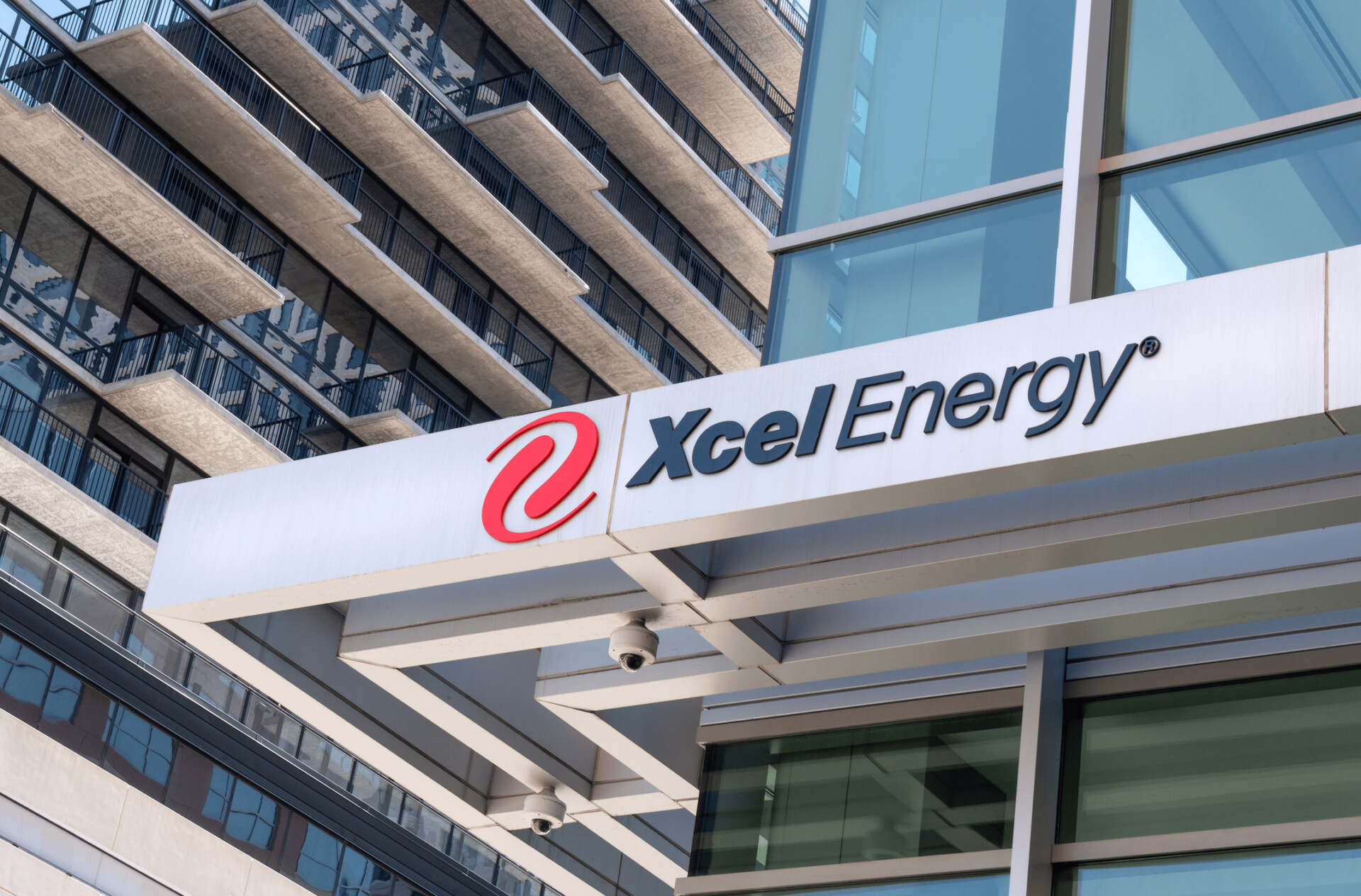
Photo credit: Ken Wolter via Shutterstock