Southwest Gas’ Integrated Resource Plan lacks support and details, advocates assert

Nevada gas utility Southwest Gas (SWG) has not provided sufficient information or analysis in its inaugural long-term resource plan to ensure the utility is proposing the most cost-effective options for its customers, Nevada advocates and state officials are saying. Intervenors who are critical of the resource plan include Nevada’s Bureau of Consumer Protection (BCP) and three organizations – Western Resource Advocates (WRA), Advanced Energy United (AEU), and Southwest Energy Efficiency Project (SWEEP) – collectively the “Clean Energy Advocates” (CEA).
SWG filed its inaugural Triennial Resource Plan application and testimony at the PUCN in September 2025. Commonly referred to as an Integrated Resource Plan (IRP), the plan proposes how SWG will meet current and future demand for methane (or natural) gas at the lowest cost to customers. SWG is proposing approximately $200 million in projects over the next 3 years, most of which the utility will ask ratepayers to pay for in future rate cases. The PUCN is holding a hearing on Southwest Gas’ IRP on February 26th and 27th.
Nevada is one of nine states with some form of regulator-overseen long-term planning process for gas utilities. Most states exclude gas utilities from this type of planning, because they differ from electric utilities in a number of ways. For instance, unlike electric utilities which often have a diversified mix of resources, gas utilities purchase a uniform fuel, with options on a much smaller scale historically requiring less intensive planning. However, as gas planning grows in complexity due to fuel cost changes, climate goals, emerging technologies, energy efficiency, and demand response programs, policymakers in states like Nevada are requiring integrated resource plans from gas utilities to achieve new objectives.
SWG misses the mark on IRP’s intent
The IRP process was enacted in Nevada in 2023 in Senate Bill 281. Senator Rochelle Nguyen sponsored the bill – receiving Southwest Gas’s public support – in response to the PUCN opening an investigatory docket in 2021 “that evaluated the future of natural gas in Nevada.” An analysis by EPI found that several groups calling on the PUCN to expand fossil gas infrastructure in the 2021 docket had financial ties to SWG through its charitable foundation. Nguyen said the IRP process enacted by SB 281 would increase transparency around SWG’s utility planning by “establishing a process for regulators and ratepayers to weigh in on the company’s plans” while allowing the PUCN and SWG to “address concerns she’s heard from constituents about increasing rates.”
Intervenor testimony in SWG’s IRP underscores that Senator Nguyen’s transparency goals and concern about rising rates may not be addressed by the current IRP process or plan from SWG.
Intervenors show SWG IRP lacks adequate justification for its requests and PUCN process could improve
The intent of Nevada’s gas planning law is to ensure the Commission approves the lowest reasonable-cost plan and requires SWG to conduct a comparative evaluation of gas-delivery resources to demonstrate the need and cost-effectiveness of its activities. Testimony from intervenors in the case casts doubt on whether SWG determined whether its projects comprise the lowest reasonable cost plan or the most cost-effective option.
Several intervenors raised concerns in their testimony about SWG’s justifications for the utility’s various project requests due to increased capacity needs. The Bureau of Consumer Protection’s (BCP’s) Robert Napper criticized SWG’s proposed System Integrity Projects (SIP), which include new pipeline extension projects and certain system replacement projects. Napper highlights that “it is a recurring theme in SWG’s Resource Plan and testimony that the presentation of the projects is lacking enough information to confirm scope and cost is appropriate.” The Clean Energy Advocates’ (CEA’s) Rick Brown bolstered Napper’s claim, focusing on three of these projects proposed for SWG’s Northern Nevada service territory, where SWG seeks replacement of existing pipes with larger ones. Brown notes that SWG’s response to a discovery question is inconsistent with SWG’s own expert witness’s justification for the replacement projects, and the data provided shows no existing capacity shortfalls. Therefore, according to Brown, there is no justification for increasing the pipe size, which will cost millions of dollars.
CEA’s Michael Kenney cited issues with SWG’s forecasts of customer growth, another main driver of the utility’s justification for projects. CEA finds discrepancies between SWG’s estimates of a 1.52% annual growth rate and the State of Nevada’s most recent population forecasts estimating an annual growth rate under 1% statewide and for Clark County. The concern with a faulty customer forecast is that “there is a risk that the system is built to meet demand that never materializes.”
CEA and the BCP offer several recommendations to SWG on where to provide vital data and information, and to the Commission on ways to improve the IRP process. BCP’s Napper recommended SWG provide detailed, itemized cost estimates, which the utility currently does not do, and recommends SWG provide better documentation showing what the capital planning pertains to, since SWG did not adequately justify some of the costs of its proposed projects. CEA’s Kenney recommended revising the gas resource plan rules by explicitly requiring utilities to evaluate lower-cost alternatives, forecast multiple future scenarios of customer growth and gas demand, and engage in a more robust stakeholder process to inform the plan prior to filing.
The experts’ recommendations are consistent with the National Association of Regulatory Utility Commissioners’ (NARUC) findings from its Task Force on Gas Utility Planning’s Affordability Cohort Roadmap. The PUCN rule requires the utility to evaluate lower-cost alternatives, but as Brown’s testimony shows, SWG’s proposal lacks analysis of alternatives. The Commission diverges significantly from NARUC’s Gas Task Force’s eight-step outline for effective stakeholder participation by only requiring the utility to meet with stakeholders one time at least four months prior to filing its plan. As stated by Kenney, “there is no opportunity for meaningful dialogue between the Commission, utility, and stakeholders outside of the litigated proceeding.”
Pipe replacement programs similar to SWG’s proposals shown to cause large rate increases
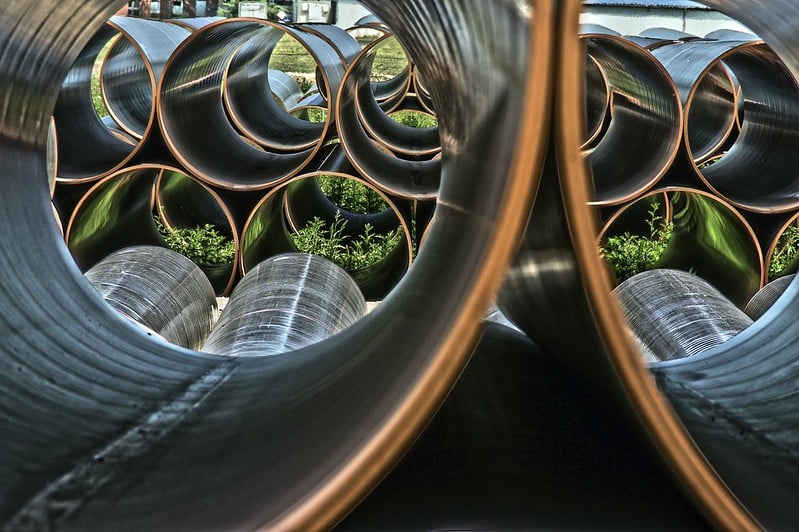
The largest expenditures proposed in SWG’s IRP are its two pipeline replacement programs, which account for approximately 50% of the IRP’s annual average budget. The 84/85 Replacement Program totals $54 million from 2026 through 2028, costing $18 million per year for three years. A significant portion of the project aims to replace pipeline butt fusions, which SWG determined were caused by incorrect operations. CEA argues that because the butt fusion issues were caused by mistakes made during installation, then repair is the responsibility of SWG, not its ratepayers, and proposes that the least-cost option would be to repair the butt fusions rather than replace the entire service pipe. The BCP supports the same approach in its testimony, and goes on to assert the total cost of the program is “inaccurate” and that the utility’s explanations “for the high upfront costs are not persuasive.” SWG did not explore a comparative evaluation for the program in its resource plan.
SWG plans to spend the majority of its capital budget on the service replacement of its 7000/8000 Driscopipe – a replacement project totaling $65.4 million. The BCP called the program “unreasonable” because of its high cost and SWG’s improper treatment of the pipeline as high risk. CEA’s testimony shows SWG did not provide detailed information on the specific pipes to be replaced, but did find that many of the planned replacement pipes are currently inactive. CEA recommended that, for this reason, abandonment of the pipes would be the more prudent, lower-cost option, rather than replacement, “given that these pipes serve no customers.” If SWG’s proposal is approved, these projects would be added to the rate base in a future rate case, and SWG would be guaranteed a percentage of profit on the expense. Gas utilities across the country have used replacement projects to overhaul gas systems, raising profits and swelling customer bills.
Pipeline replacements of questionable necessity have caused costs to balloon in other states. In 2015, the Massachusetts legislature implemented the Gas System Enhancement Plan (GSEP) to speed up replacement of old leak-prone pipes by allowing gas utilities to pass the costs onto customers right away. By 2025, GSEP’s total cost reached $901 million, a 300% increase over ten years. Senator Michael Barrett, who served on a group studying GSEP, stated, “Every time you put in a new gas pipe, it’s a 40-year addition to your monthly gas bill.” Recently, the utility Eversource reported a 24% increase in its profits in 2025, and critics of rising costs point to programs like GSEP that incentivize gas companies to “accelerate the replacement of old and leaky gas pipes by getting to recover the costs for that work – with guaranteed profit – from customers right away.”Similar scenarios have played out in places like Washington D.C. where in 2024, the city council filed a petition to the Public Service Commission to investigate Washington Gas Light Company for its pipeline replacement project, “PROJECTpipes.” The Council cited its own climate goals as misaligned with the project, affirming that as more homes and buildings electrify, the system would become obsolete and it would be expensive for Washington Gas customers. The Office of People’s Counsel, the consumer advocate for ratepayers in D.C., found that since the initiation of PROJECTpipes in 2014, the Washington Gas system had more gas leaks, replacement was below projections, and the budget was not in line with the utility’s initial proposals.
Proposed DSM programs fall short on cost savings and effectiveness
SWG included other programs in its IRP that do not appear to clear the bar of cost effectiveness. SWG is proposing a $3.3 million annual budget over three years for its Demand Side Management (DSM) Plan. The DSM Plan includes extensions of existing programs as well as a new Residential Equipment Direct Install (REDI) Rebates Program that provides enhanced rebates of up to 75% for efficient appliances. The BCP’s testimony states that the REDI Rebates Program is not cost-effective, according to SWG’s own analysis, and recommends that the Commission reject it. CEA’s recommendation focuses on SWG’s Tier 1 appliance offering in its REDI Rebates Program, which CEA finds will soon be only slightly above the federal appliance standard minimum, and as SWG does not specify the efficiency of the appliances, it is unclear what the benefits to customers truly will be. Further, CEA’s Kenney said this program – and others proposed in the DSM Plan – “encourages the installation of a specific technology and fuel but does not result in the highest efficiency home possible.”
Request demonstrates risks of RNG
SWG is requesting an approximately 79% increase in the allowed price cap of renewable natural gas (RNG) from the current cap of $14/Decatherm to $25/Decatherm. SWG cites its reasoning for the adjustment as a need to balance changing market dynamics in which the utility needs to access competitive RNG supplies.
The BCP noted that not only does SWG not provide adequate support for the price cap increase, but the utility’s plan does not include costs for proper gas quality monitoring. The BCP recommends this monitoring because RNG injected into the distribution system poses risks of introducing contaminants in the pipeline. RNG is considerably more expensive than methane gas, and SWG’s provided data shows that in the markets SWG appears to be purchasing RNG, the demand growth is outpacing supply, and the utility is acquiring less economic sources of RNG. Additionally, as highlighted in CEA’s testimony, “RNG is not sufficiently available to meet all residential and commercial demands, particularly when other sectors may compete for those resources and have a higher willingness to pay.”
In a 2020 report, Earthjustice and the Sierra Club found that RNG is not available at the scale necessary to decarbonize buildings, nor will it resolve many air pollution issues concerning the use of gas. The report also found that RNG adoption would lead to significantly higher customer costs. Investigations into utilities’ promises promoting RNG have underscored the companies’ failure to meet climate goals with alternative fuel.
SWG filed rebuttal testimony in response to intervenors and staff on February 10th. The hearing for SWG’s IRP will take place on February 26 and 27th. The Commission must render a final order in the case by April 16, 2026.