Utility industry contributions to section 527 political organizations

Gas and electric utilities and their trade associations have contributed tens of millions of dollars over the past decade to a small set of political organizations known as “527s,” which are groups that can raise and spend unlimited funds to influence elections. These organizations, including governors’ associations, attorneys general groups, and legislative campaign committees, play a major role in state-level politics by funding advertising campaigns and providing access to key policymakers on certain issues.
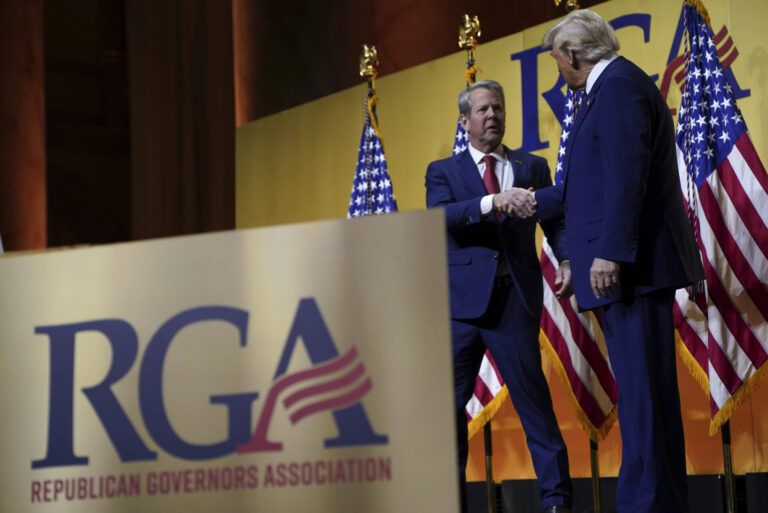
Major 527 groups that utilities contribute to include the Republican Governors Association (RGA), Republican Attorneys General Association (RAGA), Republican State Leadership Committee (RSLC), Democratic Governors Association (DGA), Democratic Attorneys General Association (DAGA), and Democratic Legislative Campaign Committee (DLCC), as well as the more recent emergence of GOPAC. Registered under Section 527 of the tax code, these organizations can accept unlimited corporate donations. In practice, 527 organizations function as central hubs for political influence – allowing utilities to shape the political environment that governs their profits, regulatory oversight, energy policy, and customer bills.
The utility industry has contributed over $118 million to major 527 organizations, and donations have been increasing over the years. The industry collectively contributed $4.4 million in 2016, and contributed $9.6 million in 2024, according to an Energy and Policy Institute analysis.
Influencing elections, funneling money to candidates
Utility companies and their trade associations can give unlimited amounts of money to 527 political organizations, which can play a major role in state elections. Unlike direct contributions to candidates, the utility donations to 527 organizations can be much larger, giving the companies another avenue to influence the political environment. The organizations often use those funds to spend heavily in state races, including through television and digital advertising, mailers, and other campaign activity. For utilities, these donations can help shape who becomes governor, attorney general, or state legislator.
A 2017 investigation by The Wall Street Journal found that corporations use groups like the RGA and DGA to effectively route money toward specific candidates, even in states with campaign finance restrictions. While donors cannot formally earmark contributions, they can signal interest in particular races or note that a donation is made at a candidate’s request – allowing these organizations to steer funds accordingly.
This dynamic was evident in Virginia’s 2019 legislative elections. After Dominion Energy faced backlash and candidates began refusing its direct contributions, the company shifted more of its spending to groups like the RSLC and DLCC. Those organizations, in turn, spent heavily in Virginia races. The RSLC alone spent more than $3 million in the state that year.
Dominion’s contributions accounted for a substantial share of utility industry funding to these groups during that period – making up 43% of utility contributions to the DLCC and 37% to the RSLC between 2019 and 2020 – illustrating how utilities can continue to influence elections even when direct giving becomes politically toxic.
The data presented in the table reflects annual aggregates and is organized by the utility parent company. Individual utility contributions organized by date are found at this hyperlink.
Access to public officials
In addition to influencing election outcomes, investigative reporting has repeatedly shown how these political organizations provide donors with access to elected officials and influence over policy discussions, often tied to contribution levels.
An investigation by The New York Times revealed that then-Oklahoma Attorney General Scott Pruitt and other attorneys general formed a “secretive alliance” through RAGA with major fossil fuel companies to oppose environmental regulations.
Documents published by Documented in 2018 show that companies that contributed $50,000 to $125,000 annually to RAGA could receive private policy briefings with Republican attorneys general. Top-tier donors gained access to exclusive dinners, retreats, and policy discussions. Reporting by The Intercept further revealed that RAGA operates a file-sharing platform, “The Briefing Room,” where donors contributing more than $25,000 annually receive posting access to share policy materials.
A CBS News investigation into a 2018 RAGA retreat at a luxury resort in South Carolina found that lobbyists who paid $125,000 attended multi-day events featuring private access to attorneys general, alongside leisure activities like golf and beach outings. Of 88 contributions reviewed, more than half of the donors had matters pending before, or recently settled with, an attorney general’s office.
Additional records show that high-level RAGA donors were invited to exclusive retreats, policy symposia, and monthly briefings, and could help shape discussion topics and participate directly in panels with attorneys general.
Similar access structures exist across other 527s. At a 2017 RGA “Corporate Policy Summit,” donors met privately with governors and staff to discuss energy regulation and federal policy. Meeting agendas from prior years show closed-door sessions on energy portfolios, air quality, and regulatory strategy. The RGA also maintains a private policy library accessible to governors and their staff, populated with materials from industry and affiliated organizations.
On the Democratic side, HuffPost reported in 2018 that donors who contributed $35,000 or more to the DLCC were granted one-on-one meetings with state legislators, as well as access to informal networking events.
EPI has also documented candid remarks from elected officials at these events. At a 2016 fundraiser, then–West Virginia Attorney General Patrick Morrisey thanked donors for supporting litigation against federal environmental rules, stating that their contributions helped “lead the charge” against the Clean Power Plan.