
Utility group EEI backs recovery bond reclassification that drives up electric bills

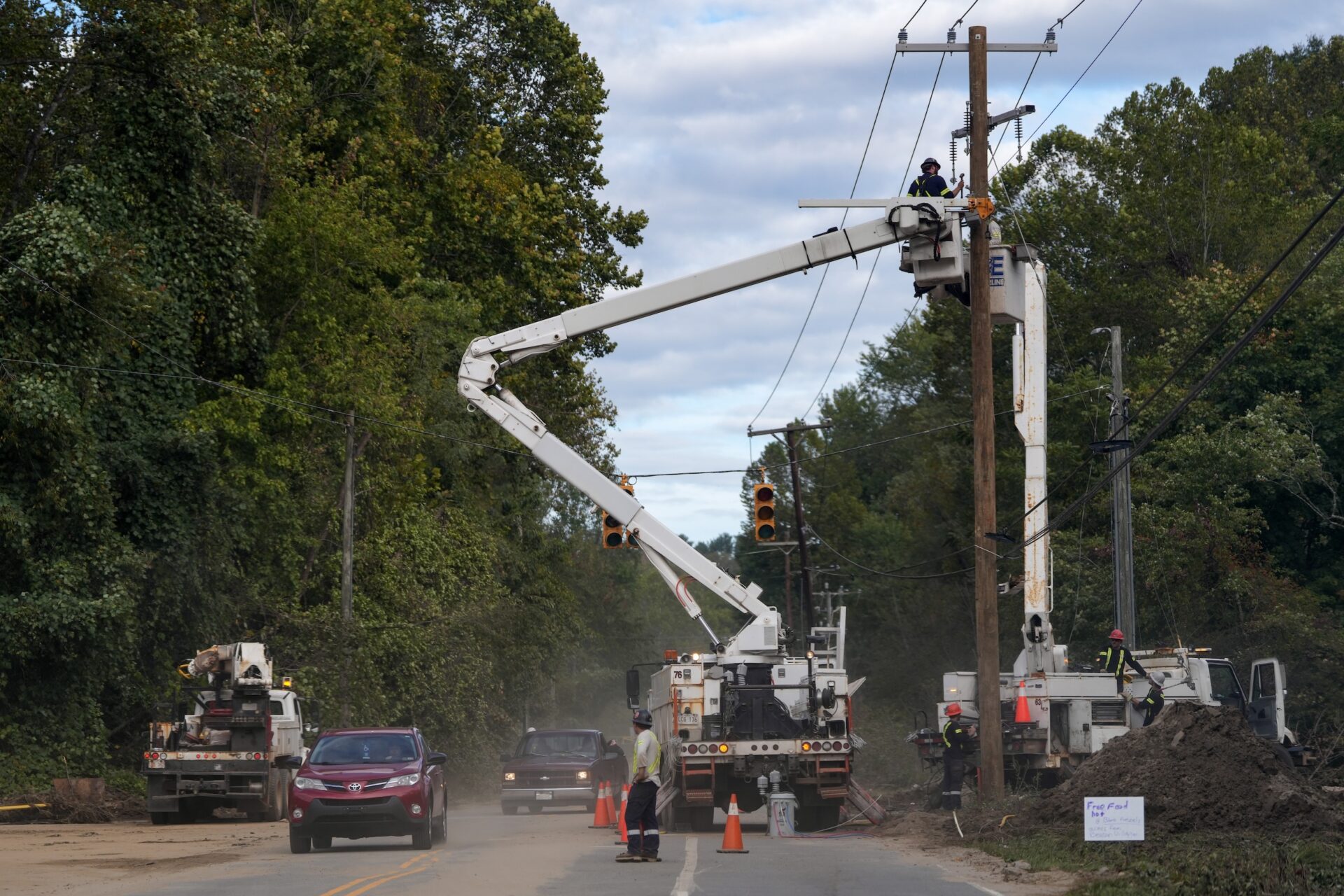
Many Americans remember the 2008 financial crisis as a story about home mortgages being bundled, sliced up, and sold to investors in ways that hid how risky those securities actually were. Those mortgage-backed securities are a specific type of “asset-backed securities,” whose income payments come from a pool of underlying assets like loans, leases, or credit card balances.
Federal regulators are now arguing over whether to keep that same ABS label for a very different kind of security: the ones electric utilities issue to pay for storm damage, wildfire cleanup, coal plant closures, and other extraordinary costs.
And the trade association that represents these investor-owned utilities — the Edison Electric Institute (EEI) — wants regulators to preserve the current label, which consumer advocates say is driving up customer bills.
These bonds are known as “utility recovery bonds” (URBs), “storm recovery bonds,” or “ratepayer-backed bonds.” States created them more than two decades ago as a way to lower costs for utility customers. For most of their financing, utilities either borrow money, and recover that cost plus interest rates typical of corporate debt through electric rates, or they spend shareholders’ money, and recover that cost plus authorized profits (typically around 10%) through rates.
Under URBs, a utility commission or state legislature authorizes a dedicated, legally protected rate on future sales of electricity, with that charge appearing on all customers’ bills to repay the bonds. Unlike the utility’s other rates, regulators agree to regularly adjust the URB rate to account for changes in electricity sales, customer payments, unpaid bills, and other management factors. These adjustments ensure that enough money is collected to pay bondholders in full and on time.
Because that revenue stream is unusually low risk — backed by state law as well as the utility’s business operations — these URBs have historically carried some of the lowest interest rates available in the market. Lower interest costs mean lower charges on customers’ electric bills.
Whether the Securities and Exchange Commission labels URBs “asset-backed securities” (ABS) or “corporate bonds” — currently the topic of an ongoing SEC comment file — might sound like mere paperwork. However, the label can determine which investors can buy the URBs, how they assess the risk, and what interest rate they demand. Ultimately those borrowing costs are paid for by electricity customers.
Many large institutional bond buyers like pension funds, mutual funds, and insurers can’t hold ABS at all under their own rules, or have restrictions on the amount they can hold. Other funds track specific bond indices and stop buying once a bond drops out of the index. When fewer buyers compete for a bond, the seller has to offer a higher interest rate to attract buyers. Since URBs are repaid through a charge on customer bills, any increase in the interest rate is passed directly to customers.
State elected officials, utility regulators, and utility consumer advocates are among those asking the SEC to abandon the current approach of classifying URBs as ABS and return to the corporate classification that had been used for them previously.
Bloomberg initiated the URB classification change
The shift toward classifying URBs as ABS began in 2022 with Bloomberg, one of several so-called “index providers” — firms that sort bonds into benchmark categories like “corporate” or “asset-backed.” Informal SEC staff guidance issued in 2024 and 2025 reinforced the shift, which narrowed the investor pool for these bonds and pushed up their interest rates. For years before their recent reclassifications, Bloomberg and its predecessor, Barclays, classified URBs as corporate bonds. SEC staff also supported non-ABS treatment since at least 2007 through a specific analysis and legal conclusion that remains available on the SEC’s website.
The SEC has not opened a formal rulemaking on the URB classification question. The matter is instead before the agency through a broader concept release on securitization regulation issued in September 2025 involving residential mortgage-backed securities. The public comment file has become the forum for the URB fight. Meanwhile, the 2024 and 2025 staff interpretations remain in place as informal guidance. Though the concept release page says public comments were due Dec. 1, 2025, the SEC has continued to post comments received since then.
The SEC recently took the opposite position on bonds for building AI data centers. On July 29, 2026, the agency’s Office of Structured Finance — which is also handling the URB question — told the law firm Latham & Watkins that securitizations backing data centers fall outside the ABS definition, keeping that market open to the full range of institutional investors. This means financing for Wall Street’s AI build-out is getting easier terms than financing for storm and wildfire recovery costs that utility customers have no choice but to pay.
Prominent state leaders have weighed in against classifying URBs as ABS. In September 2024, a group of eight governors, seven of whom remain in office — Gavin Newsom of California, Jared Polis of Colorado, J.B. Pritzker of Illinois, Maura Healey of Massachusetts, Gretchen Whitmer of Michigan, Michelle Lujan Grisham of New Mexico, and Kathy Hochul of New York — along with Roy Cooper of North Carolina, who left office in January 2025 and is now running for U.S. Senate, wrote to the SEC to make a case against the ABS label:
Classification of utility recovery bonds as “asset-backed securities” defies common sense, harms millions of electricity consumers, and provides no clear investor protection benefit. Utility recovery bonds are in no way like asset-backed securities such as credit card bonds, collateralized debt obligations, or any asset-backed security such as those that were problematic during the financial crisis. … Sometimes taking a little from a lot of people doesn’t get noticed and therefore no one may seem to care. But governors and regulators do care.
Two months later, the National Association of Regulatory Utility Commissioners and the National Association of State Utility Consumer Advocates passed resolutions opposing ABS classification of URBs. State consumer advocates including Donald Kreis of New Hampshire, Michael Angelo of Hawaii, and Mark Poston of Missouri have individually filed comments with the SEC citing the NASUCA and NARUC resolutions. In addition, former chairs of the Colorado and Texas public utility commissions, Ron Lehr and Rebecca Klein, have filed comment letters opposing the reclassification.
There’s also an active lawsuit over the reclassification. In June 2024, a group of Texas and California utility customers sued Bloomberg L.P. and Bloomberg Index Services Ltd. in the U.S. District Court for the Southern District of New York; Skolarus et al. v. Bloomberg, L.P.. alleges that Bloomberg’s URB reclassification manipulated the bond market to benefit its institutional customers at the expense of electricity customers. A district court dismissed the lawsuit in September 2025 under the filed rate doctrine, a legal principle that presumes that rates set by a utility regulator are reasonable. The suit is now on appeal to the U.S. 2nd Circuit Court of Appeals, where oral arguments were heard on May 4, 2026.
EEI backs costlier classification without directly saying so
At a glance, EEI’s comment to the SEC could be mistaken for a technical submission on the narrow question of what forms URB issuers use to register the bonds for public sale, staying out of the thick of the classification fight. But beginning in 2024 the SEC has treated the offering form and classification questions as inseparable.
Under the SEC’s registration structure, securities determined to be ABS typically use ABS-specific forms, and those determined to be corporate typically use corporate forms. For URBs, though, the SEC appears to have concluded that securities using ABS-specific forms must be ABS — even when the security doesn’t meet the definition. As a result, asking the SEC to keep URBs on ABS forms is asking it to keep URBs classified as ABS.
EEI’s letter, submitted to the SEC on Dec. 1, 2025 and signed by Kristen Siegele, the group’s former executive director for government relations, doesn’t argue that the ABS label is correct. In fact, it takes no outright position on what URBs are. Instead, it argues on procedural grounds that the SEC should not require URBs to be classified differently than they now are, stating plainly that it “would not support” requiring URBs to register on corporate forms.
The objections EEI raises relate to the burden of another procedural switch and not the substance of the classification question. EEI says third-party reviewers would likely need to issue “comfort letters” verifying the utility’s financial statements, creating an extra cost for utilities that doesn’t currently exist for URB deals. In addition, EEI cites that corporate issuers are typically barred from selling securities during blackout windows tied to the financial reporting calendar. Yet these are the same conditions under which utilities sell every other SEC-registered bond they publicly offer for sale; their first mortgage bonds and holding-company notes come to market on corporate registration forms, with comfort letters, inside the reporting calendar, as routine practice. What EEI describes as a burden is the standard disclosure regime its members meet every time they borrow in the public capital markets — except for these URBs.
Nowhere in its letter does EEI dispute — or even mention — critics’ central claim: that keeping URBs on ABS forms is measurably widening the pricing gap between URBs and comparable corporate debt, at ratepayer expense.
Critics have answered EEI’s procedural argument on the record. A supplemental legal analysis filed by the law firm Orrick, Herrington & Sutcliffe, along with a previous analysis by Winston Strawn, argue that EEI’s letter and another from American Bar Association committees making a similar argument fail to engage at all on the legal question of whether URBs meet the statutory definition of an ABS.
EEI did not respond to a request for comment.
What experts say ABS classification means for utility customers
One of the leading voices challenging the reclassification of URBs as ABS is Joseph Fichera, CEO of Saber Partners, a financial advisory firm that has represented state commissions and consumer advocates structuring, marketing, and pricing URB deals for more than two decades. His firm has estimated that the URB reclassification has cost electric customers nationwide roughly $4 billion in additional interest expense since 2022. That analysis appears in a December 2025 comment letter filed with the SEC.
Hyman Schoenblum, a former treasurer of Consolidated Edison of New York and a senior advisor to Saber Partners, said in an SEC filing in support of the governors that URBs function like secured corporate utility bonds. Classifying them as ABS, he says, restricts the pool of potential investors and raises borrowing costs for customers. He describes the unnecessary borrowing costs created by ABS classification as “junk fees” imposed on some of the highest-quality securities that utilities can offer.
The so-called “junk fee” or pricing penalty has also been evaluated in peer-reviewed literature. An April 2025 analysis in the journal Nature Energy — whose lead authors were Fichera and Paul Sutherland, former assistant treasurer for Florida Power & Light — reported URB credit spreads over U.S. Treasuries and AAA benchmarks of roughly 18 basis points for bonds issued from 2016 through 2021, rising to about 74, 76, and 51 basis points in 2022, 2023, and 2024, after reclassification. The analysis estimated that the mispricing adds roughly 3 to 11% to the total cost of the affected financings.
Using the maturity-matched approach behind its national estimate, Saber Partners has also analyzed Duke Energy’s storm recovery bonds in North Carolina, where in 2019 the legislature authorized utilities to securitize storm costs through Senate Bill 559. Saber’s tranche-by-tranche analysis of those URBs, issued in 2021 and 2025, finds that the reclassification has cost Duke’s North Carolina customers an extra $77.8 million compared to similarly rated corporate bonds.
In March 2024, the Wall Street Journal conducted its own review of URB transaction data using Federal Reserve numbers to compare Southern California Edison’s URB pricing before and after Bloomberg’s 2022 reclassification. The Journal focused on a tranche of SCE URBs sold in 2021, before the reclassification, and a similar set sold after the change in 2023.
SCE’s 2021 URBs were priced at about 0.6 percentage points above comparable U.S. Treasury obligations, while its April 2023 URB offering was priced at roughly 1.2 percentage points above. Spreads on other top-rated corporate bonds stayed essentially flat over the same period.
With hurricane and wildfire seasons underway and more URBs ahead, the basis-point gap is not just an abstraction for ratepayers who will have to foot the bill for grid rebuilding: It’s the difference between paying for more expensive ABS-classified bonds to rebuild the grid after catastrophes, versus paying a cheaper rate if the label reverted to corporate.